
Our Literacy Lab Site Journey
by Tammy
One of our goals in the elementary school is to become a community of practice. What does this mean? [blockquote]A community of practice is a group of people who share a concern or a passion for something they do, and learn how to do it better as they interact regularly.[/blockquote]
Over the past couple of weeks, our elementary classroom teachers – and elementary administrators – have participated in some extraordinary learning experiences. We worked with Maggie Moon, an international literacy consultant, to create lab site experiences in our school. Maggie has worked with hundreds of schools around the world. Prior to consulting, she was a senior staff developer at The Reading and Writing Project at Teachers College, Columbia University as well as an elementary classroom teacher.
Grade Level Lab Sites
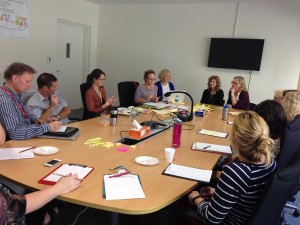
Teachers planning for their lab site lesson.
During Maggie’s visit, we planned grade level specific lab sites. All six teachers at a grade level ran the lab as a team. They were located in one classroom as they worked with approximately 20 students. In planning for their lab site, the team:
- Selected a mini-lesson teaching point
- Decided which four teachers would lead each of the mini-lesson elements:
- Connection
- Teaching point
- Active engagement
- Link
- Assigned teachers to additional roles where they:
- Led a Mid-Workshop Teaching Point with the class. This was semi-planned ahead of time in concert with the mini-lesson. It was adjusted if something more pressing arose from the student work in the lab.
- Facilitated the Teaching Share to wrap up the day’s lab. This was also semi-planned ahead of time in concert with the day’s work and adjusted if necessary.
In the classroom, the teachers sat together in front of the students and led the mini-lesson with each person leading a part. During Active Engagement, teachers paired up to confer with individual students. One teacher would confer with a student while the other listened and made notes. When appropriate, they would call for a “freeze frame” conference to provide critical feedback to each other while the student would continue reading. Maggie moved among the class to provide more feedback during this time.
Cross Grade Level Lab Sites
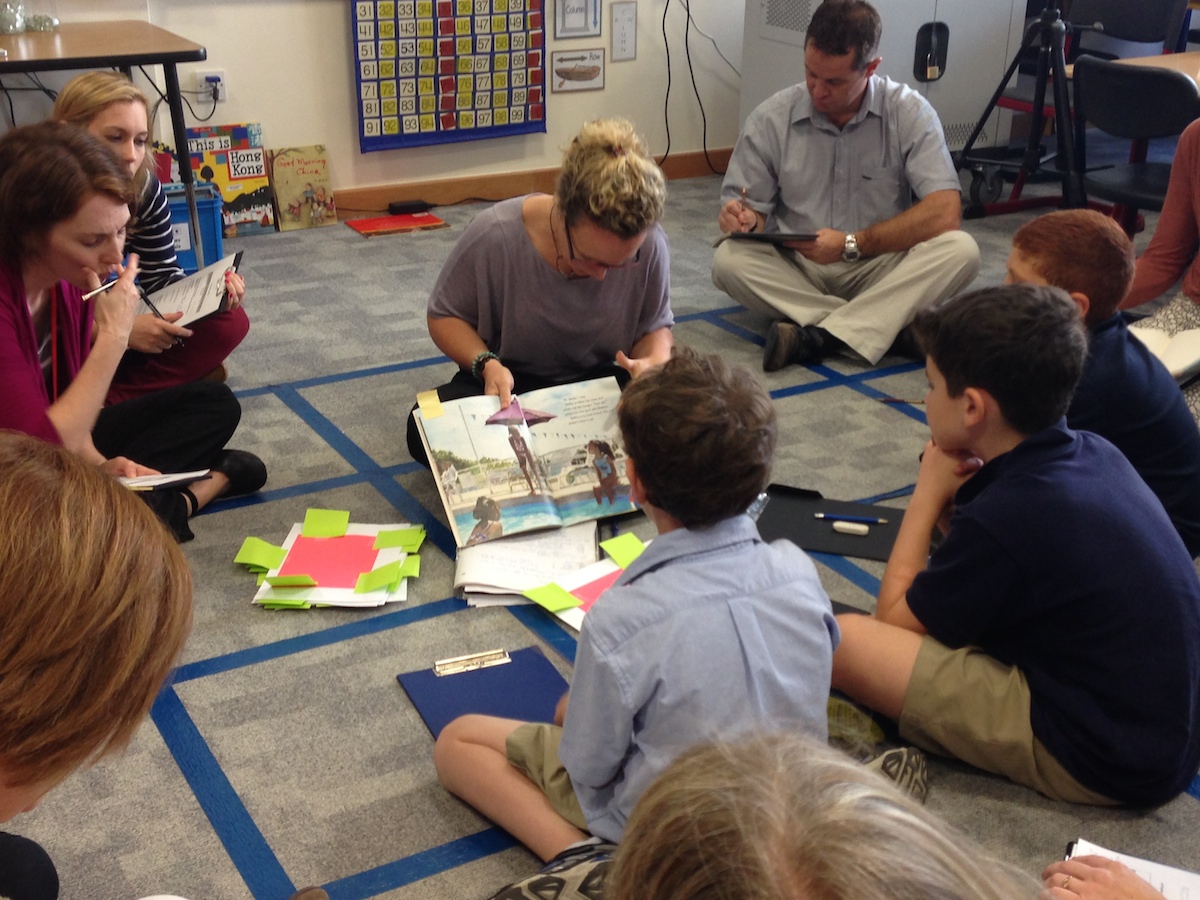
Maggie leading a small group strategy session with second graders.
A second opportunity involved teachers from two different grade levels working together on a lesson. Similar to the first experience, the groups of teachers worked as teams in one classroom to facilitate these lessons. The paired grade levels were K2 and Grade 1, Grades 2 and 3, and Grades 4 and 5. Each group chose to focus on one of the following:
- Read Aloud lab lesson
- Conferring lab lesson
- Small Group Strategy lab lesson
As a finale to our lab sites, Maggie led a session with all of the classroom teachers to debrief and bring closure to the experience. In addition, she challenged us to continue our work together.
Keeping the Learning Going
The logistics of planning for these lab site experiences were quite involved, and the commitment from the school for resources and substitute coverage was significant. However, the payoff in the amount of learning the teachers realized more than justified the overhead. As I think about it, I know that creating the lab sites within our school was actually the easy part. The challenge will be taking advantage of the momentum we’ve created to keep the learning going.
What is our plan for moving forward? Our teachers have begun planning for more visits to each other’s classrooms through the remainder of this year. These visits will be the basis for continued rich discussions about literacy and student learning. For 2014-15, a full time literacy coach will join our staff to develop additional ongoing opportunities and support.
We are truly excited about this journey that we are on to develop as a literacy lab site. We look forward to creating a community of practice as we learn with – and from – each other.
Recommended Posts

What We Model Is What We Get
October 07, 2017

Massive Learning with #IMMOOC
September 22, 2017
Starting with a Visit
September 17, 2017